Guji Buku Heirloom
From Central Coast Coffee in Somersby, NSW
Tasting notes
Dark fruit, red berries, cocoa and caramel
- Origin
- Ethiopia · Guji, Hambela WoredaProducer: Buku Sayisa Washing Station
- Roast
- Medium light · For espresso
- Process
- Natural
- Caffeine
- Regular
- Varietals
- Heirloom
- Altitude
- 2000-2300 masl
What Central Coast Coffee say
This coffee’s roasted in our espresso style — but that doesn’t mean you need to brew it as espresso. You can make it however you like — espresso, filter, moka pot, AeroPress or whatever you enjoy. We roast it a touch darker than we would a filter roast to caramelise the sugars and bring out smooth chocolatey and nutty flavours that cut beautifully through milk.
When you add milk the natural sweetness, fat and proteins tend to soften acidity and highlight caramelised flavours. That’s why lighter filter roasts can sometimes taste a bit sharp or sour with milk — they’re simply not built for it. Espresso roasts being more developed balance this out. The deeper caramelisation creates toffee and cocoa notes that blend harmoniously with milk’s creaminess while a hint of gentle bitterness adds that satisfying ‘coffee punch’ in your flat white or cappuccino.
If you prefer your coffee black this roast will still give you a full-bodied rich cup with plenty of depth and sweetness. For a lighter fruitier experience you might enjoy exploring our filter range instead.
“Heirloom” is a catch-all term for the countless wild or cultivated varieties found in Ethiopia, many of which are genetically unique. These coffees are renowned for their complexity, often showcasing vibrant florals, citrus, and stone fruits. Since they’re genetically diverse and often uncatalogued, each heirloom coffee is a unique experience.
The natural process involves drying whole coffee cherries under the sun, allowing the beans to absorb flavors from the fruit as they dry. This results in a coffee with a heavy body, fruity sweetness, and complex flavors. It’s commonly practiced in Ethiopia and Brazil, where the climate is conducive to sun-drying.
The ROEST P3000 is a compact powerhouse that redefines what’s possible in small-batch production roasting. With the ability to roast 1–3 kg batches in under 7 minutes and crank out over 25 kg per hour, it delivers serious output without demanding a full-time operator. Automation handles everything from preheating to cooldown, with between-batch protocols ensuring consistent conditions roast after roast. Its slim footprint and lightweight build make it perfect for roasteries where space is tight but precision and efficiency are non-negotiable.
What truly sets the P3000 apart is its unmatched control and data richness. It features more than 18 sensors—bean, exhaust, drum, humidity, pressure, and even a first-crack microphone—paired with PID-controlled airflow, drum speed, and temperature. A built-in bean camera offers live visual feedback, eliminating the need for a trier and paving the way for future AI enhancements. Whether you’re dialing in new coffees or replicating profiles at scale, the P3000 brings the lab-level accuracy of the ROEST sample roaster into full production—effortlessly and repeatably.
Ethiopia | Guji Buku | Heirloom Natural Grade 1 - When is peak flavour?
This lot comes from Buku Sayisa, known locally as Blessed Valley, in the Hambela woreda of Guji. Around 600 smallholders deliver cherry from farms between 2,000 and 2,300 metres above sea level. Farmers here intercrop coffee with maize, barley, wheat and beans in fertile sandy loam, growing indigenous varieties suited to the region. The station dries the whole cherry on raised African beds for 10 to 20 days. The lot cupped at 86.75 points.
Guji is a zone in the Oromia region of southern Ethiopia and home to the Oromo people, who have lived here for more than 500 years. Coffee runs deep in Oromo culture; legend says the first coffee plant grew from the tears of the sky god Waaqa. High elevation, volcanic soil and varied microclimates give Guji naturals dense fruit and heavy sweetness, and the zone now ranks alongside Yirgacheffe and Sidama.
At Buku's altitude these varieties mature slowly. The beans pack in sugar, and natural processing on raised beds concentrates the fruit further.
In this cup you get plum, dark berries and a lingering dark chocolate finish. Roasted for espresso, it pulls a syrupy, fruit-forward shot and holds its own through milk.
Similar beans
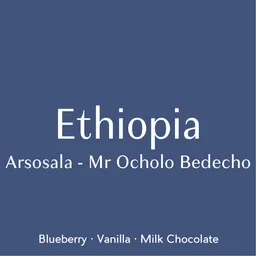 Arsosala NaturalProdigal Coffee Roasters$8.80 /100gEthiopiaChocolateBerry
 The Honey ThiefKoKo Coffee Roasters$9.60 /100gEthiopiaChocolateCaramel & sweet
 Gargari Gutity G1 RedONA Coffee$11.00 /100gEthiopiaChocolateCaramel & sweet
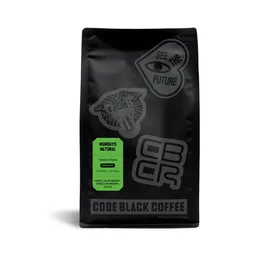 Mundayo · EspressoCode Black Coffee$11.60 /100gEthiopiaChocolateCaramel & sweet
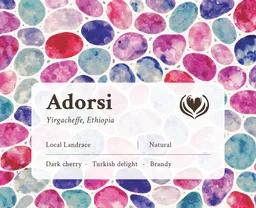 AdorsiMade of Many$12.00 /100gEthiopiaChocolateCaramel & sweet
Find Central Coast Coffee beans near me
Central Coast Coffee
Beans sold here by the roaster
Central Coast
Beans sold here by the roaster