Decaf
DecafFrom 23 Degrees Coffee Roasters in Cheltenham, VIC
Tasting notes
Smooth - Chocolate - Toffee - Orange
- Origin
- Roast
- The roaster does not state the roast level.
- Process
- Washed
- Caffeine
- Decaffeinated · Swiss Water
- Varietals
- Arabica
- Certifications
- Organic
What 23 Degrees Coffee Roasters say
For those moments when you want all the flavour but none of the caffeine, say hello to our freshly roasted Organic Decaf . Featuring beans carefully sourced from Mexico , this decaf is roasted with the same love and meticulous attention as all our small-batch specialty coffees.
Thanks to the brilliant folks at Swiss Water and their 100% chemical-free process , we retain all the tasty goodness while removing only the caffeine. And yes— don’t panic, it’s organic !
With a smooth body and irresistible notes of chocolate, toffee and orange , this organic decaf is the perfect choice for any time of day.
Brewing methods that work best for these decaf coffee beans.
Enjoy your organic decaf coffee beans across a range of different brewing methods:
espresso, plunger, stovetop, Aeropress and batch brew .
We’ve tested these decaf coffee beans and created an espresso recipe you’ll love. Ideal for drinking with or without milk. If you brew for a long black, try a 1:2.2 ratio instead of a 1:2 ratio.
The extraction time tells you if the water has enough time to extract all the tasty goodness in the coffee. Adjusting your grind size will help you to achieve the suggested time in our recipe. You want to grind finer if you extract a yield in a shorter time. And grind coarser if you achieve the yield in a longer time than suggested.
99.9% of the caffeine are removed throughout the Swiss Water decaffeination process. That's why every decaf production is sampled and tested in the Swiss Water lab to ensure it meets this threshold.
The Swiss Water process: Chemical-free and tasty tasting decaf.
Discover how caffeine is removed from your coffee - the Swiss Water process.
Ever wondered how the caffeine is removed from coffee beans?
Now, the biggest challenge in removing caffeine without removing the other tasty soluble compounds. The Swiss Water process uses a clever ingredient - the caffeine-deficient green coffee extract concentrate called GCE.
GCE is created by soaking green coffee beans in very hot water. The soluble compounds including caffeine) are dissolved in the water throughout that soaking process. The water is then passed through a carbon filter. The larger caffeine molecules are caught by the filter and the remaining solubles pass through the filter. The filtered water now contains soluble compounds without caffeine and is called green coffee extract or, in short, GCE. This extract is used to decaffeinate a fresh batch of coffee.
A batch of fresh coffee beans is placed in water supersaturated with soluble coffee compounds minus the caffeine – the GCE.
Now with the fresh coffee added, there is an imbalance between the solubles in the coffee beans, which include the caffeine and the GCE water, which contains all the solubles except for caffeine. To create an equilibrium, the caffeine from the coffee beans slowly migrates (leaches) into the GCE water until the caffeine in the coffee bean water and in the GCE water is in balance. After the caffeine leaches from the coffee beans into the GCE water, it is passed through carbon filters to trap the larger caffeine molecules.
This process is repeated using freshly flushed GCE until the caffeine is removed. The clever thing is that the tasty solubles of the coffee remain in the coffee bean, so they don’t leach into the GCE water. That’s because the GCE water is already saturated with those soluble. Clever, right? The result is decaf coffee beans without the loss of flavour.
Decaf is coffee - just without caffeine. For selecting our decaf coffee beans, we apply the same rigour as we apply to any of our other coffees. We look for sweetness, unique flavours, body and some sparkle to make the cup balanced and interesting.
Every coffee roasts differently, and nothing holds truer than roasting decaf coffee beans. Too often, you may have come across decaffeinated coffee that oozes oils. Not very inviting, right? The coffee beans are soaked in water throughout the Swiss Water Process, which softens the bean cell structure. The softer coffee beans absorb heat faster throughout the roasting process. And if roasted too hot or for too long, they can become noticeably oily. That’s why we apply a gentler roasting approach to our decaf coffee beans so that those tasty oils won't leach out and your decaffeinated coffee tastes delicious.
Similar beans
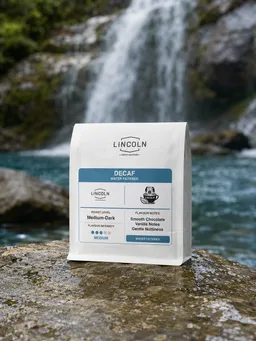 Mexican DecafLincoln Coffee$9.00 /100gMexicoChocolateCaramel & sweet
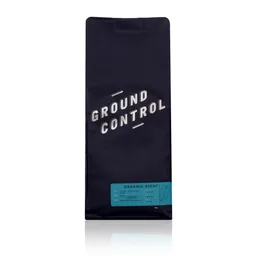 Organic DecafGround Control Coffee$9.20 /100gMexicoChocolateCitrus
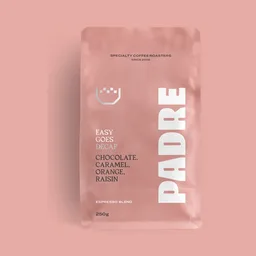 Easy Goes Decaf Espresso BlendPadre Coffee$9.60 /100gMexicoChocolateCaramel & sweet
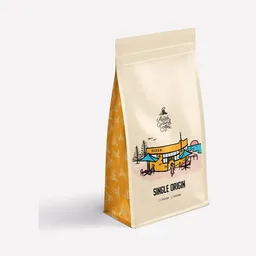 Swiss Water DecafAbove Ground Coffee$7.20 /100gMexicoChocolateCaramel & sweet
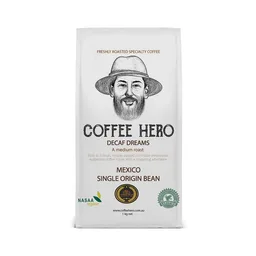 Decaf DreamsCoffee Hero$10.40 /100gMexicoChocolateCaramel & sweet
Find 23 Degrees Coffee Roasters beans near me
23 Degrees Coffee Roasters
Beans roasted and sold here