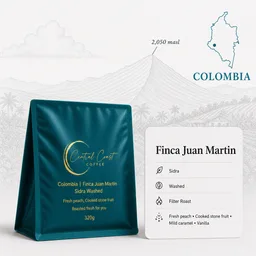
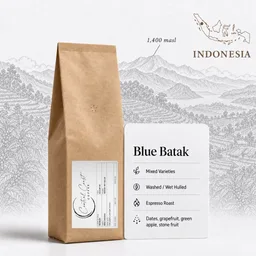
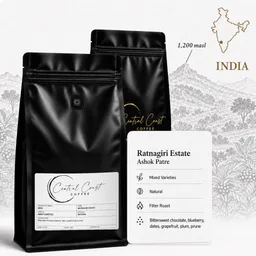
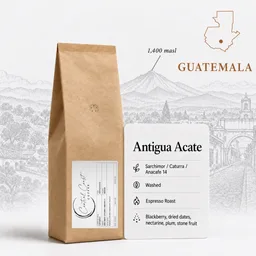
La Divisa Gesha Washed Signature Series
From Central Coast Coffee in Somersby, NSW
Tasting notes
Caramel | brown sugar | lemongrass
- Origin
- Colombia · QuindíoProducer: Sebastian Gomez / La Divisa
- Roast
- Light · For filter
- Process
- Washed
- Caffeine
- Regular
- Varietals
- Gesha
- Altitude
- 1600-1800 masl
What Central Coast Coffee say
Gesha (or Geisha), originally from Ethiopia, gained fame through Panamanian farms for its outstanding floral and tea-like cup profile. Often described as jasmine, bergamot, and stone fruit in the cup, it commands some of the highest prices in specialty coffee. It has low yields and is challenging to grow but highly sought after for competition and premium markets.
In the washed process, coffee cherries are depulped to remove the skin and pulp, then fermented to eliminate the mucilage before thorough washing. This method produces a clean, bright cup with pronounced acidity and clarity, highlighting the coffee’s intrinsic flavors. It’s widely used in regions with ample water resources, such as Colombia and East Africa.
For our exotic coffee, we store all the green beans frozen at -22°C in commercial freezers. This locks in freshness, halting enzymatic reactions that degrade flavor. Upon arrival we separate into small 2-3kg vacuum-sealed lots and freeze so that our greens do not age and we can sell these exotic coffees for years to come or until sold out.
This is a more accurate reflection of the actual roast colour than external as it's measured after grinding. Internal Agtron reveals how far into the bean the roast has penetrated. Our filter roasts often score over 100, preserving acidity, florals, and the unique vibrant characteristics of each origin and process. Please bear in mind that grind coarseness can affect the internal colour readings, so it is impossible to compare from roaster to roaster using this colour reading.
The Agtron spread is the difference between the colour of whole beans and ground coffee, showing how deeply the coffee is developed. A spread of 0–10 usually indicates very dark, oily roasts typical of Italian-style, which we don't offer at our Roastery. Spreads between 11–20 and 21–30 represent the roast levels you'll find in our espresso coffees, balancing sweetness, acidity, and body. Spreads above 30 make up most of our filter coffee range, featuring very light, bright roasts that highlight fruity, floral, and complex flavours. Within this, spreads from 31–40 offer clarity and vibrancy, while spreads of 40–50 showcase ultra-light roasts with delicate acidity and nuanced character.
This shows how the recommended grind size for this coffee differs from our baseline Coastal Blend setting. A negative number means a finer grind is recommended; a positive number means coarser. It helps dial in your grinder without starting from scratch.
Colombia | La Divisa | Gesha Washed | Signature Series - When is peak flavour?
Sebastian Gomez comes from a traditional coffee family. He along with his father owns La Divisa Farm, a 13-hectare farm, located at 1.700, in Circasia, Quindío. On the farm, they have some beautiful shade trees such as Guamo, Guayacan, Gualandai, and Nogal.
Sebastian is a young farmer and along with his wife both work on the coffee duties and administrative matters. His father, John, has been working in coffee for more than 30 years and has been taking care of the coffee farm since he bought the farm in 1995. Sebastian started to be more involved in coffee in 2014 when he came back To Colombia. Sebastian could witness the specialty movement in other countries, so he decided to be more involved in coffee and it was when they decided to focus on specialty coffee. They planted varieties such as Gesha and Pink Bourbon.
Sebastian shared that they knew they were about to wait and just let their hard work speak out. It was three years after they could see the marvellous result. Sebastian tells us that 10 years later, quantity was the focus, but now they see a radical change since now the focus in the coffee industry is quality. Now they want to do differentiated coffees since they know that is what the market demands too.
Gesha (also spelled Gesha) is known for its exceptional cup quality, especially when grown at high altitudes. Gesha was first discovered in Abyssinia, Ethiopia in 1931. It was planted in Panama for the first time in 1963 and in Colombia in 2005 - the name supposedly derives from Ethiopia's Gori Gesha forest.
There is some confusion with several genetically distinct varieties that have all been called Gesha, but the most famous variety is the Panama one. The variety was brought to Lyamungu research station in Tanzania and from there to Centro Agronómico Tropical de Investigación y Enseñanza (CATIE) in Central America in 1953. At CATIE, the variety was logged as T2722. CATIE distributed T2722 across Panama in the 1960s for its Coffee Leaf Rust (CLR) resistance, but its brittle branches meant it was not widely planted.
Similar beans
 Peñas Blancas GeishaInfinity Coffee Roasters$15.25 /100gColombiaCaramel & sweetCitrus
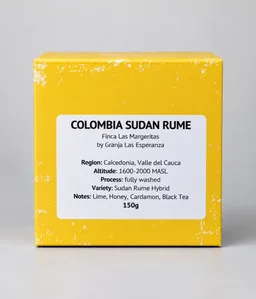 Sudan Rume HybridGrand Central Coffee$16.67 /100gColombiaCaramel & sweetCitrus
 Light Side BlendST. ALi$14.22 /100gColombiaCaramel & sweetCitrus
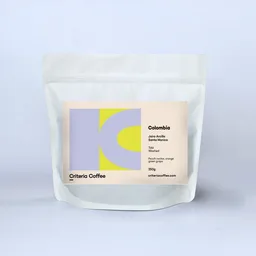 Jairo Arcilla - Santa Monica, TabiCriteria Coffee$12.80 /100gColombiaCaramel & sweetCitrus
 La Bomba Yellow GeshaMule Coffee Roasters$12.75 /100gColombiaCitrusEarthy
Find Central Coast Coffee beans near me
Central Coast Coffee
Beans sold here by the roaster
Central Coast
Beans sold here by the roaster