La Asunta
From Central Coast Coffee in Somersby, NSW
Tasting notes
Jammy nectarine and mellow cooked nectarine, dark chocolate, and milk chocolate flavours with balanced acidity and fruit-like sweetness.
- Origin
- Bolivia · La Asunta, Sud Yungas, La PazProducer: Jhonny Corina
- Roast
- Medium light · For espresso
- Process
- Washed
- Caffeine
- Regular
- Varietals
- Java
- Altitude
- 1500 masl
What Central Coast Coffee say
This coffee’s roasted in our espresso style — but that doesn’t mean you need to brew it as espresso. You can make it however you like — espresso, filter, moka pot, AeroPress or whatever you enjoy. We roast it a touch darker than we would a filter roast to caramelise the sugars and bring out smooth chocolatey and nutty flavours that cut beautifully through milk.
When you add milk the natural sweetness, fat and proteins tend to soften acidity and highlight caramelised flavours. That’s why lighter filter roasts can sometimes taste a bit sharp or sour with milk — they’re simply not built for it. Espresso roasts being more developed balance this out. The deeper caramelisation creates toffee and cocoa notes that blend harmoniously with milk’s creaminess while a hint of gentle bitterness adds that satisfying ‘coffee punch’ in your flat white or cappuccino.
If you prefer your coffee black this roast will still give you a full-bodied rich cup with plenty of depth and sweetness. For a lighter fruitier experience you might enjoy exploring our filter range instead.
In the washed process, coffee cherries are depulped to remove the skin and pulp, then fermented to eliminate the mucilage before thorough washing. This method produces a clean, bright cup with pronounced acidity and clarity, highlighting the coffee’s intrinsic flavors. It’s widely used in regions with ample water resources, such as Colombia and East Africa.
The ROEST P3000 is a compact powerhouse that redefines what’s possible in small-batch production roasting. With the ability to roast 1–3 kg batches in under 7 minutes and crank out over 25 kg per hour, it delivers serious output without demanding a full-time operator. Automation handles everything from preheating to cooldown, with between-batch protocols ensuring consistent conditions roast after roast. Its slim footprint and lightweight build make it perfect for roasteries where space is tight but precision and efficiency are non-negotiable.
What truly sets the P3000 apart is its unmatched control and data richness. It features more than 18 sensors—bean, exhaust, drum, humidity, pressure, and even a first-crack microphone—paired with PID-controlled airflow, drum speed, and temperature. A built-in bean camera offers live visual feedback, eliminating the need for a trier and paving the way for future AI enhancements. Whether you’re dialing in new coffees or replicating profiles at scale, the P3000 brings the lab-level accuracy of the ROEST sample roaster into full production—effortlessly and repeatably.
Bolivia | La Asunta | Jhonny Corina | Java Washed - When is peak flavour?
Jhonny Corina has owned his 8-hectare farm in the La Asunta municipality since 2015, maintaining over 16,000 trees of Gesha, Castillo and Java intercropped with citrus, plantains and native legume-family forest trees that keep the soil rich. In a region better known for coca, Jhonny and fellow producers formed the FEPIAC federation to pool production, reach better buyers and prove coffee's potential as an alternative crop. His coffee is picked by hand and dried in the sun.
A rugged municipality in Sud Yungas, La Paz, fed by waterfalls up to 400 metres high off the Boopi and Cotacajes rivers - warm, humid and ideal for coffee.
Despite the name, Java's story begins in Ethiopia: it descends from Ethiopian landrace stock, was selected and transplanted to Cameroon in the mid-20th century (where it was known as a tolerant, quality-focused smallholder variety), and reached the Americas via Costa Rica in 1991.
It has since become a quiet favourite of specialty growers across Central and South America - elegant, aromatic, stone-fruited cups with real clarity, from a tree that tolerates tough conditions better than most Ethiopian-derived varieties.
On Jhonny Corina's shaded, intercropped hillsides at 1,500 metres it shows exactly that character: jammy nectarine over dark and milk chocolate, balanced acidity and a fruit-like sweetness.
Similar beans
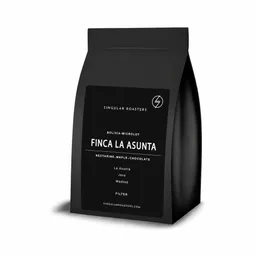 Finca La AsuntaSingular Roasters$10.00 /100gBoliviaChocolateStone fruit
 Alex JulcaProdigal Coffee Roasters$9.60 /100gChocolateStone fruitMedium light roast
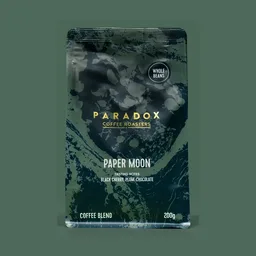 Paper Moon BlendParadox Coffee Roasters$8.25 /100gChocolateStone fruitMedium light roast
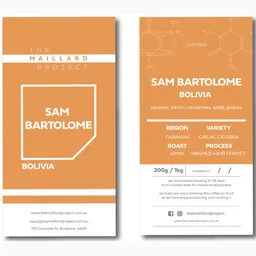 San BartolomeThe Maillard Project$11.00 /100gBoliviaStone fruitMedium light roast
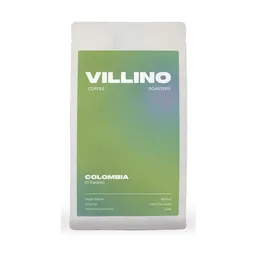 El ParaisoVillino Coffee Roasters$10.00 /100gChocolateStone fruitWashed
Find Central Coast Coffee beans near me
Central Coast Coffee
Beans sold here by the roaster
Central Coast
Beans sold here by the roaster