Monsoon Malabar
From Central Coast Coffee in Somersby, NSW
Sold out at the roaster. Last checked 7 Oct 2026.
This page stays up, and the coffee comes back when the roaster has it again.
The closest in-stock matches
 Nero EspressoByron Bay Coffee Co$6.90 /100gIndiaCaramel & sweetNutty
 Avant-Garde BlendPrivate Coffee Collection$7.00 /100gIndiaCaramel & sweetNutty
 Monsoon Malabar AAWitham’s Coffee$7.64 /100gIndiaCaramel & sweetNutty
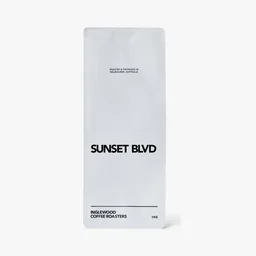 Sunset BLVDInglewood Coffee Roasters$7.00 /100gIndiaCaramel & sweetSpice
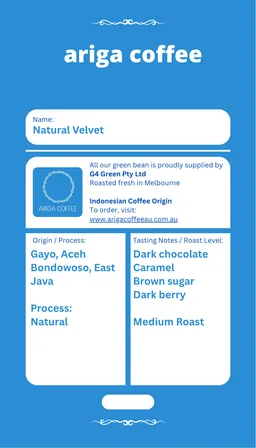 Velvet Espresso BlendAriga Coffee$8.20 /100gCaramel & sweetSpiceMedium roast
Tasting notes
Nutty roasted tones, subtle caramel and tobacco notes. Complemented by spice notes of cloves, nutmeg, pepper and cardamom
- Origin
- India · Karnataka, KeralaProducer: Estates and smallholders
- Roast
- Medium · For espresso
- Process
- Natural
- Caffeine
- Regular
- Varietals
- Kent, local selections
- Altitude
- 1000–1900 masl
What Central Coast Coffee say
This coffee’s roasted in our espresso style — but that doesn’t mean you need to brew it as espresso. You can make it however you like — espresso, filter, moka pot, AeroPress or whatever you enjoy. We roast it a touch darker than we would a filter roast to caramelise the sugars and bring out smooth chocolatey and nutty flavours that cut beautifully through milk.
When you add milk the natural sweetness, fat and proteins tend to soften acidity and highlight caramelised flavours. That’s why lighter filter roasts can sometimes taste a bit sharp or sour with milk — they’re simply not built for it. Espresso roasts being more developed balance this out. The deeper caramelisation creates toffee and cocoa notes that blend harmoniously with milk’s creaminess while a hint of gentle bitterness adds that satisfying ‘coffee punch’ in your flat white or cappuccino.
If you prefer your coffee black this roast will still give you a full-bodied rich cup with plenty of depth and sweetness. For a lighter fruitier experience you might enjoy exploring our filter range instead.
The Kent coffee variety is a historically significant Arabica cultivar, selected in India from Typica plants around 1911 for its early resistance to coffee leaf rust (CLR), though that resistance has since faded. Named after A.F. Kent, it's known for a balanced cup with fruity (berry, guava), chocolatey notes, spicy hints, and bright acidity, often grown in India, Tanzania, and East Africa, and is valued for maintaining genetic diversity.
The natural process involves drying whole coffee cherries under the sun, allowing the beans to absorb flavors from the fruit as they dry. This results in a coffee with a heavy body, fruity sweetness, and complex flavors. It’s commonly practiced in Ethiopia and Brazil, where the climate is conducive to sun-drying.
This green coffee is stored at 23°C in a climate-controlled room, which is a step up from standard warehouse storage, as the ambient temperature does not fluctuate as much
This is a more accurate reflection of the actual roast colour than external as it's measured after grinding. Internal Agtron reveals how far into the bean the roast has penetrated. Our filter roasts often score over 100, preserving acidity, florals, and the unique vibrant characteristics of each origin and process. Please bear in mind that grind coarseness can affect the internal colour readings, so it is impossible to compare from roaster to roaster using this colour reading.
The Agtron spread is the difference between the colour of whole beans and ground coffee, showing how deeply the coffee is developed. A spread of 0–10 usually indicates very dark, oily roasts typical of Italian-style, which we don't offer at our Roastery. Spreads between 11–20 and 21–30 represent the roast levels you'll find in our espresso coffees, balancing sweetness, acidity, and body. Spreads above 30 make up most of our filter coffee range, featuring very light, bright roasts that highlight fruity, floral, and complex flavours. Within this, spreads from 31–40 offer clarity and vibrancy, while spreads of 40–50 showcase ultra-light roasts with delicate acidity and nuanced character.
The ROEST P3000 is a compact powerhouse that redefines what’s possible in small-batch production roasting. With the ability to roast 1–3 kg batches in under 7 minutes and crank out over 25 kg per hour, it delivers serious output without demanding a full-time operator. Automation handles everything from preheating to cooldown, with between-batch protocols ensuring consistent conditions roast after roast. Its slim footprint and lightweight build make it perfect for roasteries where space is tight but precision and efficiency are non-negotiable.
What truly sets the P3000 apart is its unmatched control and data richness. It features more than 18 sensors—bean, exhaust, drum, humidity, pressure, and even a first-crack microphone—paired with PID-controlled airflow, drum speed, and temperature. A built-in bean camera offers live visual feedback, eliminating the need for a trier and paving the way for future AI enhancements. Whether you’re dialing in new coffees or replicating profiles at scale, the P3000 brings the lab-level accuracy of the ROEST sample roaster into full production—effortlessly and repeatably.
India | Karnataka, Kerala | Kent | Monsoon Malabar | Natural AA - When is peak flavour?
Monsoon Malabar is best enjoyed well-rested from 14 to 25+ days past the roast date once the beans have fully stabilised. This extended resting period delivers a superb flavour balance that is largely absent in the first 10+ days post-roast.
If you prefer to order only once every 2-4 weeks I highly recommend when you order you get any of our other beans and pair it with Monsoon so you can drink fresh coffee in the "sweet spot" for over 2 weeks without your coffee going stale.
Monsooned Malabar was extremely popular in Europe during the 19th and 20th centuries.
The flavours of Monsooned Malabar were originally unintentional and were simply a by-product of transporting green coffee beans to Europe. The journey from India to Europe took approximately 6 months and the coffee, which sat in the hull of the ship, would absorb moisture from the sea and the humid winds. The moisture led the beans to swell to a larger size and turn a pale beige colour. The taste of the coffee became smoother, softer and fuller.
Today, though shipping technology has advanced and now allows for the control of moisture in hulls, the demand for Monsooned Malabar remains, leading some producers to recreate the conditions of this particular coffee using special setups in their warehouses that take advantage of the monsoon winds.
Find Central Coast Coffee beans near me
Central Coast Coffee
Beans sold here by the roaster
Central Coast
Beans sold here by the roaster