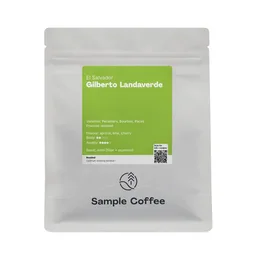
Kamwangi
From Sample Coffee Roasters in St Peters, NSW
Tasting notes
burnt orange, toffee, blackcurrant
- Origin
- Kenya · KirinyagaProducer: New Ngariama Cooperative Society
- Roast
- Medium lightEstimated. The roaster does not state a roast level.
- Process
- Washed
- Caffeine
- Regular
- Varietals
- SL28, SL34, Ruiru 11
- Altitude
- 1500 masl
What Sample Coffee Roasters say
We find flavours of burnt orange, toffee, blackcurrant The Kamwangi factory, which is in the northeast part of Kirinyaga, is owned and managed by the New Ngariama Farmers Cooperative Society (F.C.S.). It is the second factory that the co-op established; New Ngariama F.C.S. now has three factories. Roughly 985 active members deliver coffee to the factory; each farmer owns an average of 200–250 coffee trees. After harvesting, the farmers deliver cherry to the factory for sorting and separating, after which it is depulped on traditional disc depulping machines. It is then fermented for 24–28 hours in tanks, then washed in grading channels. The highest grades of coffee at this factory typically receive an additional soak of 12–24 hours, dependent solely on the available space on the drying beds. All of the coffee goes to skin-drying beds to bring the moisture content to around 44% before being spread on traditional drying beds for 9–13 days, being rotated constantly. Once the moisture content reaches 11–13%, the coffee is moved to conditioning bins, where it is stored and rotated every two days to help homogenize moisture content and stabilize the parchment coffee. Coffee in Kenya is typically traceable down to the factory, or mill level: Most farmers own between 1/8 to ¼ of a hectare, and often grow crops other than coffee as well, which means they rely on a central processing unit for sale and processing of their coffee. Producers deliver in cherry form to a factory, where the cooperative will sort, weigh, and issue payment for the delivery. The coffee is then blended with the rest of the day’s deliveries and goes on to be processed. Because of this system, which serves many hundreds to several thoughts of smallholder farmers per factory, there is limited traceability down to the individual producers whose coffee comprises the lots. Ruiru 11 variety Released in 1985, Ruiru 11 is a disease resistant varietal developed in Kenya SL28 variety SL28 was developed in 1931 by Scott Laboratories to suit the growing conditions in Kenya. The varietal is known for its exceptional cup quality SL34 variety Developed by Scott Laboratories in Kenya, the SL34 varietal was designed to be high yielding with good cup quality. --> Traceability 100% SL28 , SL34 , and Ruiru 11 coffee beans, provided by Cafe Imports and roasted by us on Gadigal land / Sydney. Country grade: Unknown Learn more: Coffee page transparency legend Our coffee philosophy Our business approach Fresh harvest sourcing Harvested: December 2025 quality of the drying/processing methods packaging storage conditions Learn everything about this coffee: Learn more: Our Loring Kestrel S35 roast
Similar beans
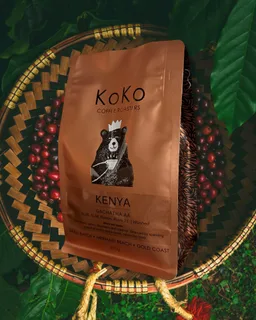 Gachatha AAKoKo Coffee Roasters$10.40 /100gKenyaCaramel & sweetBerry
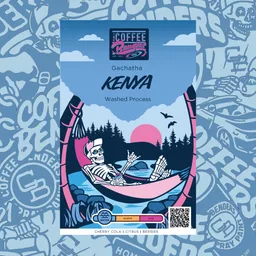 GachathaThe Coffee Benders$10.00 /100gKenyaCaramel & sweetBerry
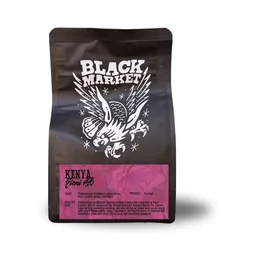 Kieni ABBlackMarket Coffee$9.00 /100gKenyaCaramel & sweetBerry
 NgomaFive Senses Coffee$8.40 /100gKenyaCaramel & sweetBerry
 Kagumoini AAGoliath Coffee Roasters$12.00 /100gKenyaCaramel & sweetBerry
Find Sample Coffee Roasters beans near me
Sample Coffee Pro Shop
Beans sold here by the roaster
1.03/75 Mary St, St Peters NSW
Mon to Fri 7am to 2pm
Sat 8am to 2pm
Sample Coffee
Beans sold here by the roaster
Shop 1a, 118 Devonshire Street (cnr, Holt St, Surry Hills NSW
Mon to Fri 7am to 3pm